
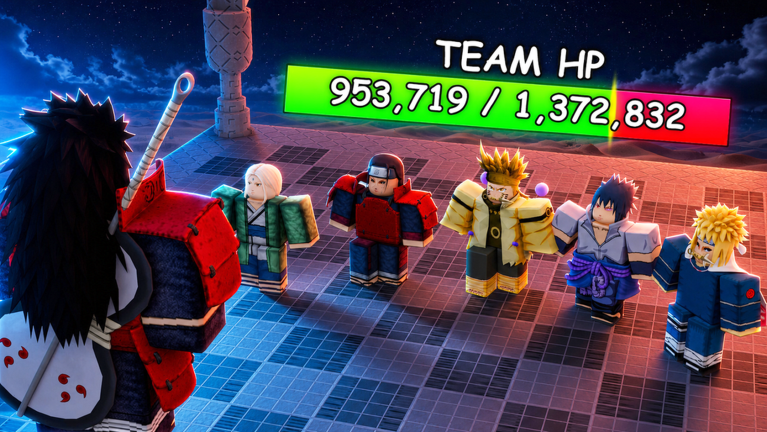
Verified team frame
Evaluate the lineup as the unit that enters battle
The useful output is not a portrait score; it is how the current lineup behaves in a comparable encounter.
- Official description
- Players build a team.
- Approved media
- Several allied fighters, opposing enemies or bosses, and Team HP displays appear.
- First-party server metadata
- The experience supports up to six players per server; that is server capacity, not a claimed fighter-slot count.
- Not published
- Complete roster, fixed roles, fighter stats, team-slot formula, or one universal best composition.
Controlled baseline
Create one lineup you can compare against
A baseline is a practical observation tool, not a claim that the team is optimal.
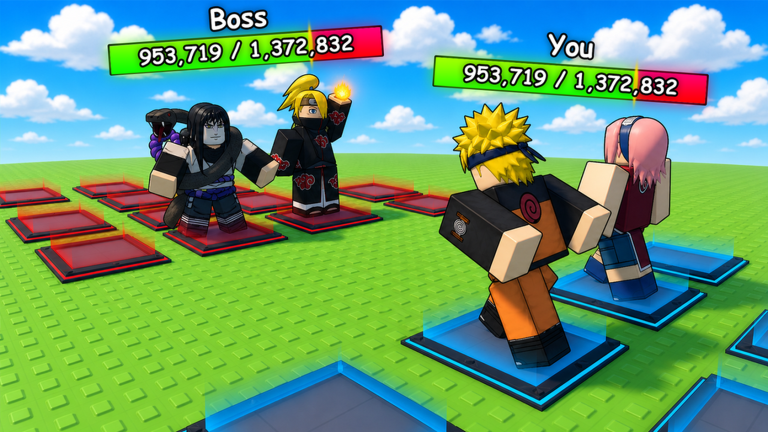 Official experience media
 - Record the lineupUse exact live labels plus visible level, growth, and mutation states.
- Choose a repeatable encounterUse the same checkpoint, wave neighborhood, or boss context when the game allows.
- Watch shared outcomesTrack Team HP behavior, progress, stalls, and completion rather than one promotional damage number.
- Repeat the baselineConfirm the result is reasonably stable before changing a slot.
- Change one slotKeep surrounding fighters and encounter context stable to isolate the new observation.
The baseline can be any current lineup that gives you a repeatable point of comparison. It is not a tier claim. Its value comes from holding most conditions stable while you test one fighter, merge result, or mutation state.
If the live game changes the encounter, enemy state, or available interface information, record that difference. A comparison with changed conditions can still be useful, but it should carry lower confidence.
Decision questions
Ask one team question at a time
Public evidence does not define roles, so use neutral questions tied to visible outcomes.
| Question | Comparison | Safe conclusion |
|---|---|---|
| Survival | Does Team HP remain healthier in similar encounter conditions? | This lineup survived better in the observed context. |
| Progress | Does the team move through the same enemy state more consistently? | This lineup progressed more reliably in repeated observations. |
| Boss pressure | Does the opponent bar move while Team HP remains sustainable? | This lineup handled the observed boss context more effectively. |
| Growth value | Does one verified merge result improve the same lineup test? | The displayed growth change helped in this comparison. |
| Mutation value | Does one live-labeled mutation state change the repeated outcome? | The observed variant behaved differently under controlled conditions. |
Arena evidence
Boss encounters make shared team state easy to read
Approved boss art shows multiple allied fighters, a boss bar, opposing sides, and Team HP—enough for an observation framework, not a prescribed lineup.
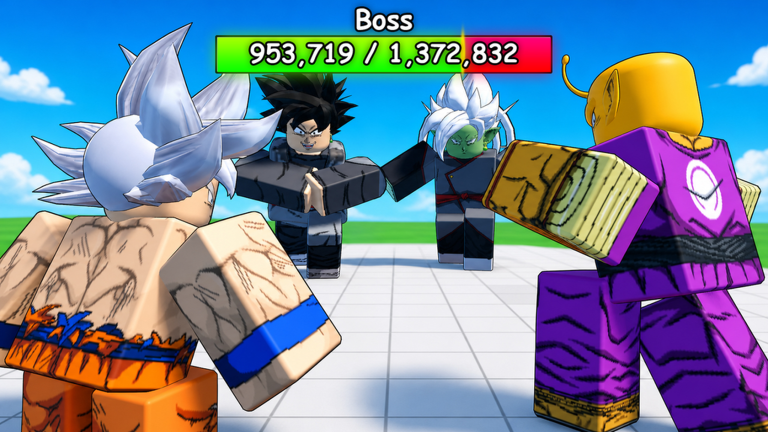 Official experience media
 Before the boss state, note how much shared Team HP remains and which lineup reached it. During the encounter, compare progress against the boss bar and whether the team continues operating. Repeat the same question after one controlled lineup change.
This method avoids claiming that the pictured fighters are required or that the health values are fixed. The image supports the interface vocabulary and battle composition; your current session supplies the mutable outcome.
Resource choices
Use evidence strength to order team changes
When rates and formulas are unpublished, irreversible actions deserve stronger evidence than reversible swaps.
- Start with reversible lineup swapsThey often answer a team question without consuming a fighter or relying on an assumed formula.
- Use current merge previewsConfirm accepted inputs, outputs, costs, and warnings before committing growth resources.
- Protect unclear variantsKeep a mutation or rare-looking fighter when identity, rate, effect, or reversibility is not verified.
- Recheck the live gameA guide observation is time-bound because live-service values and interfaces can change.
Team questions
Frequently asked questions
What is the best team in Roll Anime to Fight!?
No reviewed first-party source publishes a complete roster, comparable stats, or a fixed optimal lineup. Build a baseline, test one slot at a time in similar wave or boss conditions, and use Team HP and progress as practical outcomes. State the observed context instead of declaring a universal best team.
Does the six-player server maximum mean six fighter slots?
No. First-party game metadata supports a maximum of six players per server. That number describes server capacity, not the number of fighters in a lineup. Use the current team interface for slot limits and do not transfer a server field into an unrelated team mechanic.
How should I compare two fighters for one slot?
Keep the surrounding lineup, growth and mutation context, and encounter as stable as practical. Run the baseline more than once, replace only the target slot, then repeat. Compare shared outcomes such as Team HP and progress, and treat the result as context-specific rather than a hidden-stat formula.
Sources
Last verified: